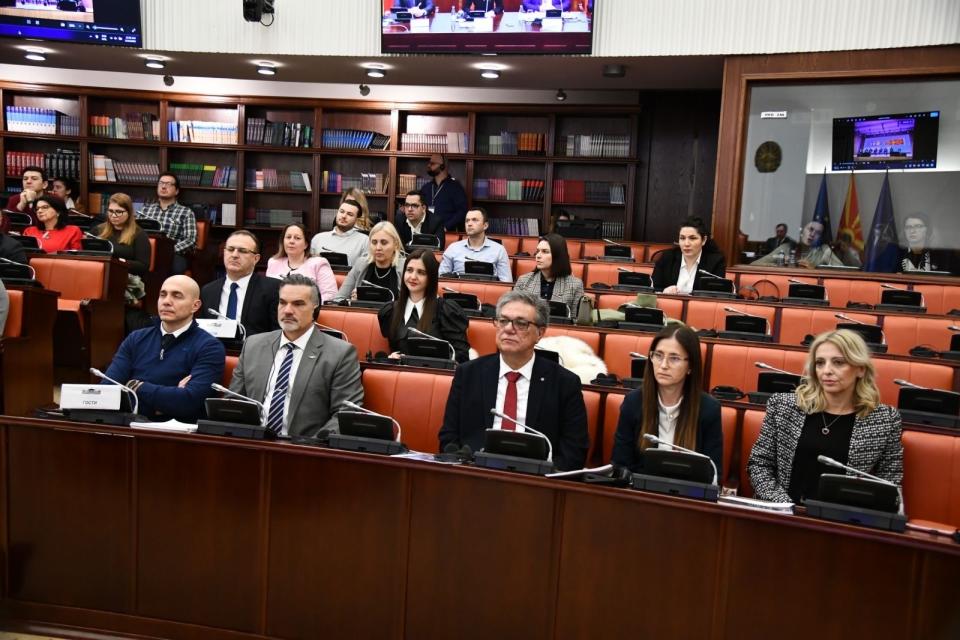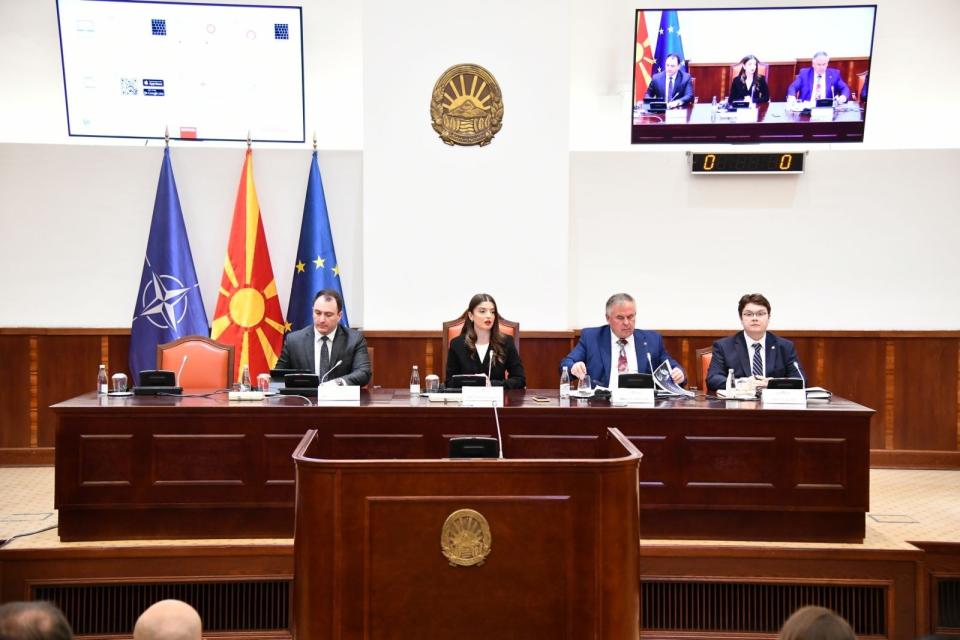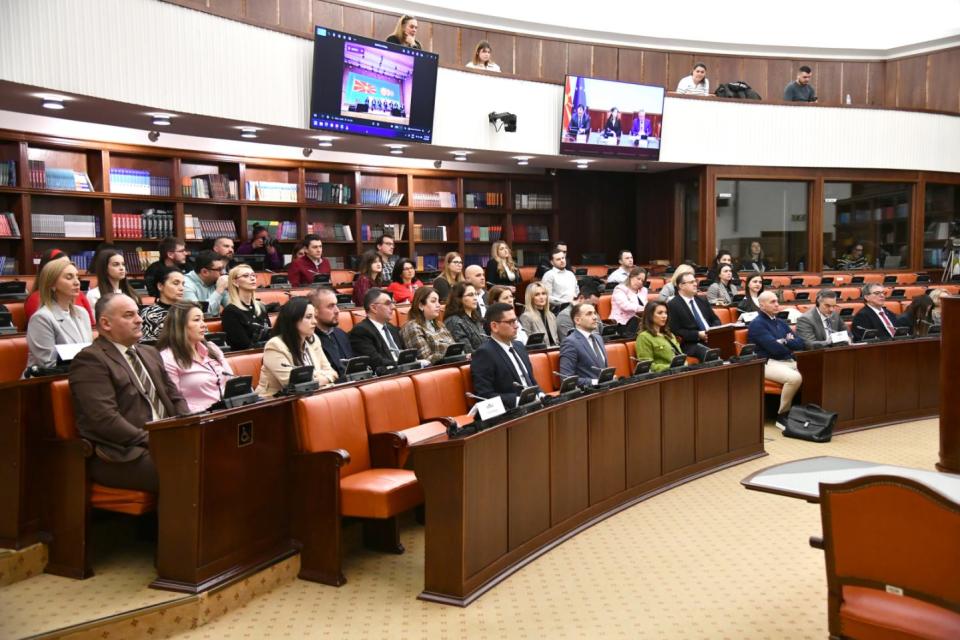

On 16 February 2026, a public hearing was held at the Assembly of the Republic of North Macedonia on the final report of the State Audit Office concerning the IT performance audit on the topic: “Potential Use of Artificial Intelligence in the Public Sector.”
The public hearing was held at the Club of Youth Affairs and Policies. The event was opened by the Member of Parliament and Coordinator of the Club, Ms. Dragana Bojkovska, who emphasized that the country must keep pace with modern democracies that already use artificial intelligence tools, noting that certain AI solutions are also being applied in the Assembly’s work.
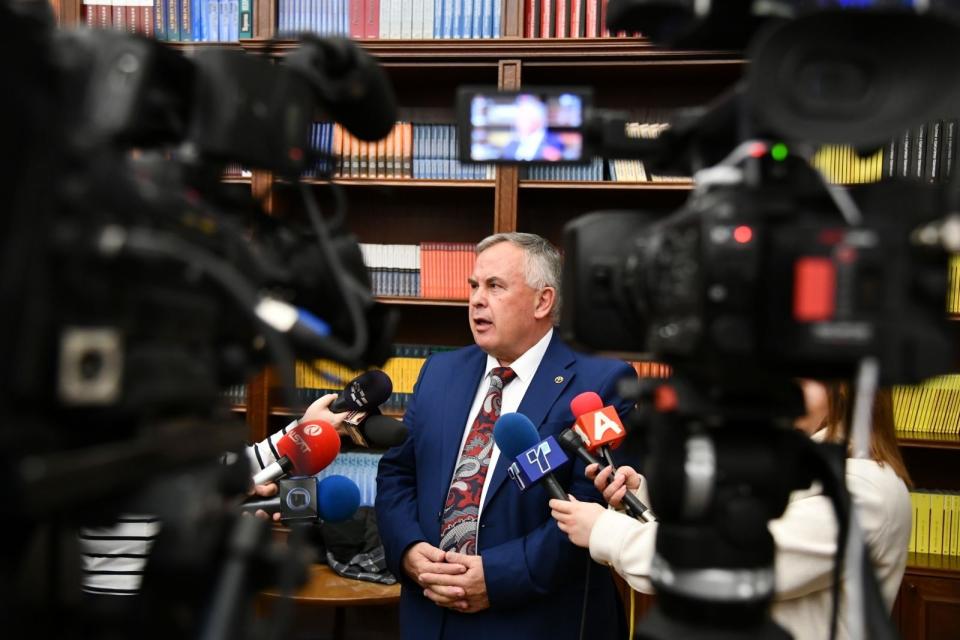
In his opening remarks, Auditor General Mr. Maksim Acevski highlighted that this performance audit initiates a strategic debate on the public sector’s readiness for digital transformation. He noted that the report, covering the period 2019–2024, provides a comprehensive analysis of the institutional, legal, and technical framework for the application of artificial intelligence.
“The key question we are raising is whether the public sector is ready to implement artificial intelligence. The report analyzes the strategic framework, legal basis, human resources, digital infrastructure, and personal data protection,” Acevski emphasized.
The Advisor to the Auditor General, Sasho Jakovchevski, presented the report. He noted that the effective implementation of artificial intelligence requires a comprehensive and stable digital infrastructure. He emphasized that the country has a growing pool of data and knowledge, which, if properly systematized and managed, can serve as a solid foundation for introducing AI solutions in the public sector.
The report notes that approximately €6.1 million was invested in 48 AI-related projects during the analyzed period, but these did not result in substantial or systematic implementation in the public sector. Findings show that it is necessary to establish a clear strategic framework, a central project registry, investments in modern IT infrastructure, and continuous capacity building.
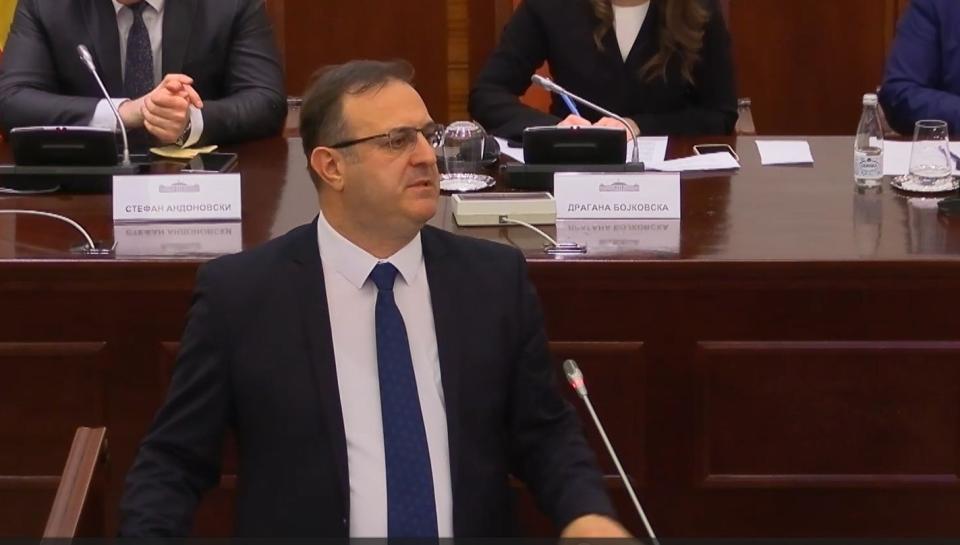
The Minister of Digital Transformation, Mr. Stefan Andonovski, noted that the Ministry is already implementing projects that lay the groundwork for the use of artificial intelligence in the public sector, emphasizing that it should represent a technological transformation in service of citizens—aimed at more efficient, accessible, and higher-quality public services.
During the discussion, it was emphasized that the use of artificial intelligence without an appropriate legal framework and institutional readiness could create more risks than benefits. Participants highlighted the need to adopt a national strategy and clear legislative regulations, strengthen institutional capacities, and ensure a high level of personal data protection.
Reviewing final audit reports within parliamentary committees and bodies is an activity foreseen in the Memorandum of Cooperation between the State Audit Office and the Assembly, aimed at strengthening parliamentary oversight and enabling more effective implementation of audit recommendations.
Through this audit, the State Audit Office once again affirms its role as a leader, strategically guiding the responsible, ethical, and functional application of new technologies in service of the public interest.