

STATE AUDIT OFFICE
- Press Release-
Skopje, 21.08.2025
Insufficient Effectiveness of the Protection System for Women Victims of Violence
The performance audit revealed that the measures and activities of the institutions fail to provide an adequate and effective support, protection and reintegration for women victims of gender-based and domestic violence. The protection system remains underdeveloped, and the number of victims and perpetrators of criminal and misdemeanor offences related to domestic violence show a concerning continuity without improvement. In 2023, men were ten times more likely to be perpetrators than women, while women were four times more likely to be victims than men. This situation indicates that the obligations under the Istanbul Convention remain unfulfilled
The State Audit Office conducted a performance audit on the topic “Implementation of the Council of Europe Convention on Preventing and Combating Violence Against Women and Domestic Violence (Istanbul Convention), with a special focus on the measures and activities undertaken by competent institutions to ensure effective specialized services for the support and protection of women victims of gender-based and domestic violence.”
Based on the data obtained and the analyses conducted, the audit obtained reasonable assurance that the measures and activities are not sufficiently effective for the prevention, support, protection and full reintegration of women victims of gender-based and domestic violence.
The Istanbul Convention was signed in 2011 and ratified in 2017, after which the Action Plan for the implementation of the Convention on Preventing and Combating Violence Against Women and Domestic Violence was adopted for the period 2018-2023, outlining 52 activities.
The audit determined that out of the 52 planned activities, 22 were fully implemented, 20 were not implemented, while 10 were partially implemented.
It was found that, for the period after 2023, no National Strategy for the Prevention and Protection from violence has been adopted, nor have all bylaws stipulated in the Law on the Prevention and Protection from Violence Against Women and Domestic Violence.
The reintegration program for victims of violence, adopted by the Minister of Social Policy, Demographics, and Youth is general, lacks a defined timeframe, and has no established goals with measurable indicators to be achieved, which creates a risk for evaluating its implementation and achieving results.
In February 2023, the Criminal Code was aligned with the Istanbul Convention, criminalizing gender-based and domestic violence, increasing penalties for sexual violence, and expanding the definition of domestic violence, and treating femicide as a qualified form of murder.
Although this represents significant progress, several challenges remain, such as:
- insufficient involvement of the civil society sector,
- insufficient criminalization of psychological violence and the fact that prosecution for bodily injury is still initiated at the victim’s request, which undermines the effectiveness of protection and reduces the objectivity of prosecuting perpetrators due to the influence and pressure placed on victims.
The planned reorganization of the Centers for Social Work has not been carried out due to the absence of a functional analysis and standardized procedures, and they also face a shortage of staff. Additionally, some associations providing specialized services are not licensed, and there is no regulated system for licensing SOS hotlines.
The number and the geographic distribution of shelters and counseling centers do not meet the standards established by the Istanbul Convention, and some existing facilities do not fulfill requirements regarding location, equipment, space, and staffing – a situation that hinders effective protection of victims.
An analysis was conducted on the need for centers for victims of gender-based and domestic violence (shelters, counseling centers, crisis centers, and SOS hotlines) according to the standards of the Istanbul Convention, where it was found that:
- Based on population size, the country needs 184 shelter beds, but only 67 (37%) have been provided, of which 48 are provided by the Centers for Social Work (CSW), and 19 by the non-governmental sector (NGOs). Regarding counseling centers, 19 are needed, and 11 have been established (59%), with 7 being run by CSWs, and 4 by the non-governmental sector.
- The geographic distribution is uneven. There are no shelter beds in the Southeast and Northeast regions within the CSWs, while NGOs provide shelters only in the Skopje and Southeast regions. Moreover, no counseling center has been established in the Southeast region, although one was planned.

Upon inspection of some of the established shelters and counseling centers, it has been determined that many of them were used in the past but are currently non-operational.
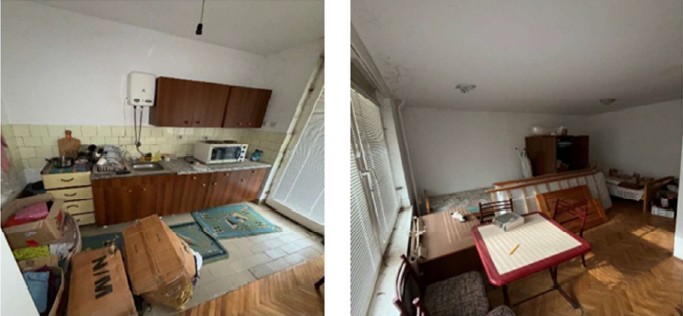
Non-Operational Counseling Center for Women Victims of Gender-Based and Domestic Violence
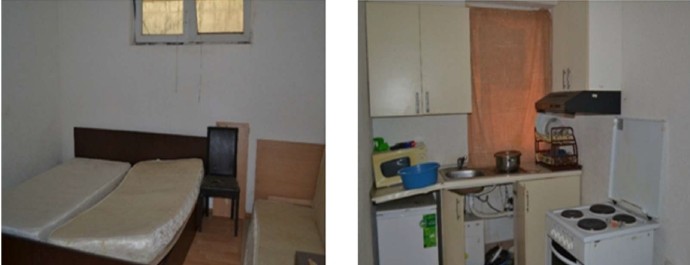
Non-Operational Shelter for Women Victims of Gender-Based and Domestic Violence

Shelter for Women Victims of Gender-Based and Domestic Violence, Currently Non-Operational Due to Expired Lease Agreement
No cost analysis has been conducted for specialized services, which prevents realistic planning of necessary funds for quality support per user.
In order to determine the trend of victims of gender-based and domestic violence in the period 2020-2023, an analysis was conducted using data from 30 Centers for Social Work, which showed that a total of 6,282 new victims were recorded during this period, with a slight increase over the years.
Based on data from the Ministry of Internal Affairs, 6,242 criminal offences related to domestic violence were committed in the period 2018-2023, 61% of which were for bodily injury, and 35% for endangering safety. A total of 6,423 perpetrators were registered, 91% of whom were men, and 6,663 victims, 79% of whom were women. During this period, 2,347 misdemeanors were also recorded, with an almost equal number of men and women victims. The data show a continuous and unchanged pattern in which men are the dominant perpetrators of violence, and women are significantly more often the victims, which points to the insufficient effectiveness of the existing prevention and protection measures.
- The number of male perpetrators of criminal offenses is 9 to 11 times higher than that of female perpetrators,
- The number of male perpetrators of misdemeanors is 3 to 6 times higher,
- The number of female victims of criminal offences is 4 times higher than that of male victims,
- For victims of misdemeanor offenses, the ratio between women and men is nearly equal.

Despite the implemented activities, the unchanged ratio between perpetrators and victims of domestic violence (DV) indicates that the activities taken in prevention and victim protection are not improving the situation.
Following a Government Decision, a National Coordinating Body was established in 2021 with the task of monitoring the implementation of the Istanbul Convention and national policies for combating all forms of violence against women, as well as promoting inter-institutional cooperation. It was found that the Body has not been fully performing its responsibilities. Additionally, there is a lack of an integrated system for recording victims, which makes it impossible to provide accurate, timely, and standardized data from all competent institutions involved in the process of prevention and protection of women victims of gender-based violence and domestic violence. This hinders the effective monitoring of the situation and the creation of appropriate and timely policies and measures for the protection and support of women victims of gender-based and domestic violence.
To address the identified issues, recommendations were provided for actions to be taken by the Government, the Ministry of Social Policy, Demographics and Youth, the Ministry of Health, the Ministry of Internal Affairs, and the Centers for Social Work, in order to create conditions for improving the overall situation related to the prevention and protection of victims of gender-based and domestic violence.
In accordance with the legal regulations and the International Auditing Standards, an external expert supported by UN Women was also consulted for certain issues related to gender equality for the audit needs.
Press Contact:
Albiona Mustafa Muhaxhiri +389 72228 203 [email protected]
Mijalche Durgutov +389 70 358 486 [email protected]
Martin Duvnjak +389 75 268 517 [email protected]